List Of Genetically Engineered Animals

79
Enviro-Pig
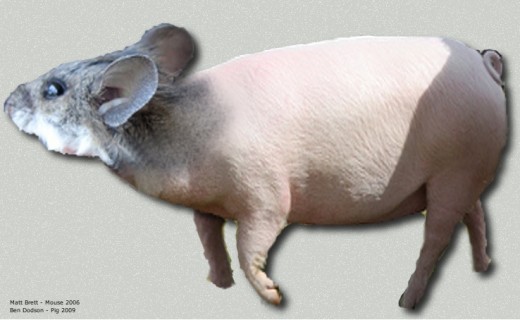
Already created the Enviro-Pig has been genetically engineered with edited DNA from a pig and genetic material from mice. The result is the Enviro-Pig, a pig that is able to break down phosphorus. Normally within a normal pigs biology phosphorus can't be broken down and it comes out in their feces. The feces is used as fertilizer for crops and eventually most of it runs off into streams and rivers. This is where the problems begin as the phosphorus drastically increases algae blooms and destroys habitats for fish. This is why the Enviro-Pig was engineered as very little phosphorus comes out in it's feces.
Although there is a great ethical and moral dilemma surrounding the creation of animals that don't exist I do think that within a controlled environment that the Enviro-Pig is one that people should consider breeding on a larger scale. There are currently talks to allow the Enviro-Pig's meat to be sold in supermarkets. Despite the picture I've included (mostly for a laugh) consider that the enviro-Pig doesn't look much different than a normal pig and it's meat would have all of the same nutrients and nutritional value as shown in extensive testing of the animal.
COWS (with human genes)
More recently in 2011 Chinese scientist have been breeding cows genetically engineered with genes from human beings to produce milk that would be the same as human breast milk. Would I support this? I must admit I am not quite sure as we are now mixing human with animal, I suppose where that line is ends is a little blurry on that one.
GOATS (that produce silk in their milk?)
As unusual as it is this is a reality. A company called Biosteel has genetically engineered goats to produce milk with strong spider web like silk proteins in their milk. These particles are used by the company to make bulletproof vests and anti-ballistic missile systems for military contracts.
PIGS (that glow in the dark!)
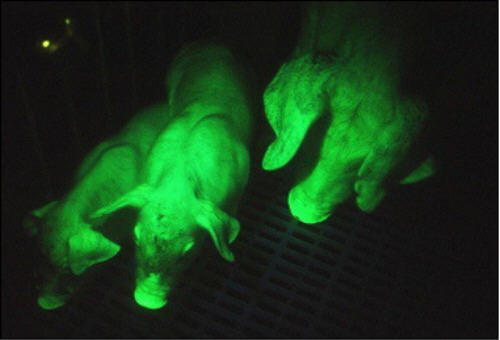
In 2006 in Taiwan scientists used genetic material from a jelly fish and implanted it into pig embyros. The result? Pigs that glow bright green in the dark! During the daylight hours these pigs have a tinge of green on their skin, snout and teeth but as soon as night comes they are light very fat fireflies trotting around their pigpen. The pigs whole body including it's internal organs and heart glow green. The Taiwan scientists have said that the pigs were created for stem cell research, but why do you need glowing pigs for that?
It can be noted that south korean scientists have also created a florescent glowing red dog called "Ruppy," which is short for Ruby Puppy.
Apes (with human genes)
Japanese scientists have implanted human genes into marmosets and are currently using the monkeys to work on a cure for huntington's disease and strokes in humans. Again is it good to be putting human genetics into animals? I'm not sure, as said earlier there has to be a line somewhere, but where?
It should also be noted that for a very long time scientists have been replacing the genes in mice (known as knockout mice) to perform these types of tests for cancer, parkinsons and other such diseases.
GLOFISH
Glofish have been around for awhile. Scientists suceeded in altering the genetics of many types of fish and now these fish can be purchased as pets. Check the short video below to see this type of fish in action.
|
|
An Introduction to Genetic Engineering, Desmond S. T. Nicholl
Current Bid: $23.99
|
| No Photo |
Remaking Eden: How Genetic Engineering and Cloning Will Transform the...
Current Bid: $.99
|
|
|
Scientists Under Attack: Genetic Engineering in the Magnetic Field of Money
Current Bid: $19.95
|
CommentsLoading...
Very interesting read - thanks for publishing.
I'm not sure either if I condone combining human and animal genes, but in a way it would be worse, in my opinion, if we were to just sit back and not bother to attempt to find a cure for the illnesses mentioned in your hub.
Though saying that, I'm very much against animal testing.
Anyway, keep up the excellent work. Looking forward to your next piece.
There are times when scientists need to step away from the experiment. Interesting hub. Voted up for originality : )
This stuff is the demise of the medical and science community. I've done a lot of research on GM animals and crops, and the results that are coming back are not positive. GM crops are failing and even worse yet, recombining with bacteria in the Human Gut. DNA recombination is out of control, all because we just had to try it. Now we have GM salmon, trout, pigs... the list goes on. Dang, I can't talk much about this, get's me fired up man. I give you props for informing others of these animals. Whether people think it's wrong or right is their opinion, but people must know about it.
Glow in the dark pigs seem a little pointless, other than that all great ideas I think.
Humans are animals too? We are all based no our genes, If they had said "scientists used ape genes so that cows produce ape milk" we would have had no problem. But realistically, that's almost the same thing, and if the ape in question was a homo sapien, we wouldn't have even noticed that it was in fact the same thing.
I think sometimes people forget that GM is all that is keeping this world alive, the bio pig is a great idea and it's a shame we didn't think of it earlier :(
Hmm, Terrek, If you think about Gene Modification, there's really very little than can go wrong. All that's happening is that you're taking a known gene from one organism and putting it into another, there's no room for something mysterious to really happen. The only real issue I could see is if they take the wrong gene and use that, but the only effect that is 99.9% likely to have is to make the new organism suffer. It's not like we're mutating animals, just adding to them, you won't be seeing any teenage ninja turtles any time soon and if you do it's because we wanted to make a realistic movie.
As in the example of the pig, all they would have taken is the gene that allows the production of enzymes that digest phosphorous from the mouse, and put it in the pig.
What could have gone wrong is that the wrong part of the pig was making the enzyme, say it's lungs or something, which would have resulted in dead pig, or the enzyme was targeted as foreign in the pig. The only real dangers, and of course this is still a sad truth, concern the new life we're making.
It seems that you missed out the most important GM and that is more efficient plants (fruit yielding, maturation, size, taste, health benefit) and the medicinal GM bacteria like the insulin bacteria without whom we would not be able to save the diabetics of the world :S
I think It's in cases like those which have real value that people should support and distinguish from "hey let's make these pigs glow in the dark". It's a bit unnecessary and doesn't really help much? (Unless we're planning on moving the pork industry to extra dark countries?).
What we do have to be careful about however is BioWarfare, but that's a whole other kettle of mutated fish..
Philanthropy!
Genetically Engineered Animals are kind of scary, there could be other unforeseen reactions that you may not see for a few generations of breeding.
If we are going to discuss about issues of GMOs, then we also have to define what is GOOD and what is BAD.
Here's an example. GMO soybeans and corn. They're bred to resist roundup and pesticides. So the big agriculturalists use more of them, grow more corn and soybeans, which we eat in the many forms in which they're provided, so now we have that stuff in our bodies too. What's it doing? Killing our own microbes with all these extra pesticides? Studies show that the bee colony disorder that's spread worldwide is caused by systemic pesticides. And the GMO products have been proven to be terribly unhealthy. Even though their yields are higher, they don't have the nutrition we need. What are we doing to ourselves?


Mother Mary 7 months ago
This is horrifying and grotesque. Perfect for Halloween. Well written, and good to know about!